Accessories
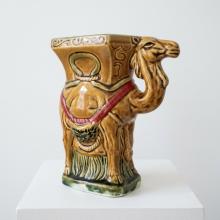
Mid-Century Japanese Glazed Majolica-Style Ceramic Camel Vessel, circa 1960s
This finely molded ceramic figure is an excellent representation of mid-century Japanese export pottery, a booming industry in the post-WWII era where factories in regions like Seto and Yokkaichi replicated and adapted historical European and Asian ceramics for the Western market.
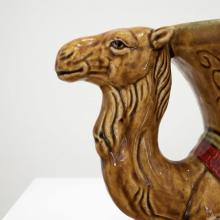
Styled after traditional Chinese Tang Dynasty sancai pottery and European majolica, this piece functions as a stylized decorative stand or spill vase. It features a brilliantly high-gloss lead glaze that characterizes the era’s export craftsmanship. The sculptural focus centers on a stylized Bactrian camel draped in elaborate ceremonial caparison, rendered in a rich, warm caramel-brown glaze with pooling in the recesses that accentuates the molded anatomy.
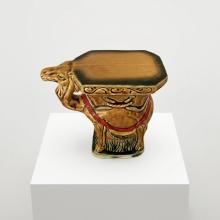
The structural design incorporates a flat, octagonal platform integrated onto the camel's back, framed by elegant low-relief scrollwork and a deep olive-green border. Below the platform, the molding features traditional rope-and-knot motifs mimicking authentic historical saddlery. The camel stands upon a rectangular plinth base textured to represent stylized grass, finished in a complementary deep emerald and black glaze.
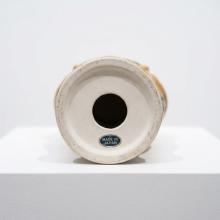
The underside remains unglazed, showcasing the clean white earthenware body typical of mid-century Japanese ceramics, and retains its original foil export label reading "Made in Japan." This piece is a highly collectible cross-cultural design artifact, demonstrating how Japanese mid-century workshops expertly blended historical global motifs with clean, sculptural execution.